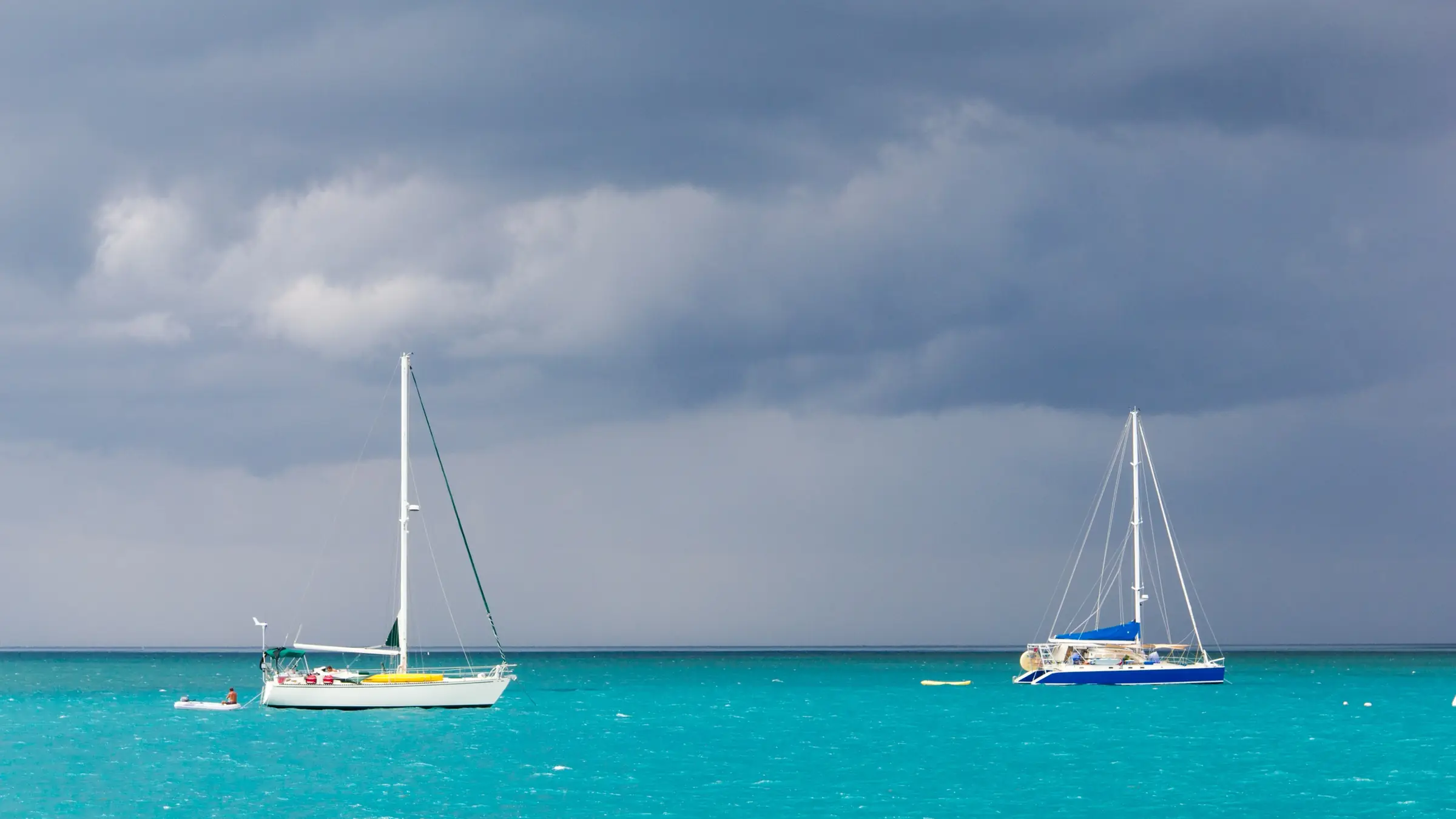
The Keys are the easiest big cruise in the state: some 135 nautical miles of warm, protected, trade-wind water inside the reef, with a bailout harbor every few hours. You can day-hop the whole chain and never make a night passage. Give it ten days one-way to sail it properly, or a long weekend to taste the Upper Keys and turn around.
Most people sail it on a chartered boat. If you don’t own one, start with the Keys charter companies. As of October 2026 two of them rent a cruising boat you skipper yourself: Florida Keys Sailing at Marathon, whose Catalinas, Irwin 34 and Beneteau 51 go out on three-day packages within 50 miles of the dock, which reaches Key West, and Calypso Sailing at Key Largo, whose Leopard catamarans run the chain and on to the Bahamas from docks in Key Largo, Key West and Stock Island. The rest of the Keys fleet sails with a captain, which is the choice if you’d rather someone else stand the watches; all of it is on the rentals page and the charter directory.
Two ways down the chain
There are two routes, and the difference matters:
- Hawk Channel: the ocean side, inside the reef. Deeper (7–20 ft), open to the southeast swell, and the natural highway for a keelboat. This is the cruising route.
- The Intracoastal (Florida Bay side): skinny, tricky, and mostly under 6 feet. Fine for shoal-draft boats and locals who know it; not where you want to learn.
Watch the reef line to the south. It’s why the Keys have wrecked ships for four centuries. Stay in the marked channel through the cuts and don’t cut corners around the reef.
The legs
1. Biscayne Bay to Key Largo (~40 nm)
Depart Miami or Dinner Key, run south down Biscayne Bay past Boca Chita and out Angelfish Creek or around Card Sound into Hawk Channel. It’s the longest day of the whole run, so leave early. Anchor behind Rodriguez Key off Key Largo, a classic first-night hook with good holding out of the prevailing east wind. Day sailors work this stretch out of Key Largo and the Upper Keys.
2. Key Largo to Islamorada (~20 nm)
An easy reach down Hawk Channel. Islamorada is the sportfishing capital and a good provisioning and dinner stop. Reef anchorages off Alligator Reef reward a snorkel if the wind lays down.
3. Islamorada to Marathon (~35 nm)
The longest leg inside the Keys proper. Aim for Boot Key Harbor at Marathon, one of the best-protected harbors in the Keys, with a large city mooring field (reserve ahead in season) and full services. This is the natural halfway point and a good place to sit out a front.
4. Marathon to Bahia Honda / Newfound Harbor (~10–20 nm)
Short hop under the Seven Mile Bridge. Bahia Honda has one of the prettiest beaches in Florida; Newfound Harbor near Little Palm Island is a sheltered overnight anchorage.
5. Down to Key West (~25 nm)
The final run into Key West. Anchor off Wisteria Island / Fleming Key or take a slip, and give yourself a couple of days: sunset sails, the reef, and the oldest port in the Keys.
Optional: the Dry Tortugas (~60 nm west of Key West)
For experienced crews only. Fort Jefferson and Garden Key are a full-day open-water passage from Key West with no bailout in between. Watch the weather window hard, and go with someone who’s done it.
When to go
November through May is the season: steady 10–20 kt easterly trades, low humidity, and the smallest chance of a named storm. Summer is hot, thundery, and inside hurricane season (June 1–November 30). Winter cold fronts bring a day or two of strong north wind every week or so; that’s what the protected harbors are for.
Before you go
Neither Keys company that rents a cruising boat names a certificate, as of October 2026. Florida Keys Sailing runs a checkout of the vessel and a signed bareboat agreement, and says a day rental may call for a demonstration of competent sailing. Calypso asks for experience on a catamaran of comparable size, then a mandatory orientation aboard and a float plan. Bring a sailing résumé either way, since it is what the conversation runs on; the bareboat charter requirements guide says what goes in it and what the other Florida docks ask. If you’re not there yet, a Keys sailing school or a crewed charter gets you on the water this week.
Last reviewed October 2026.