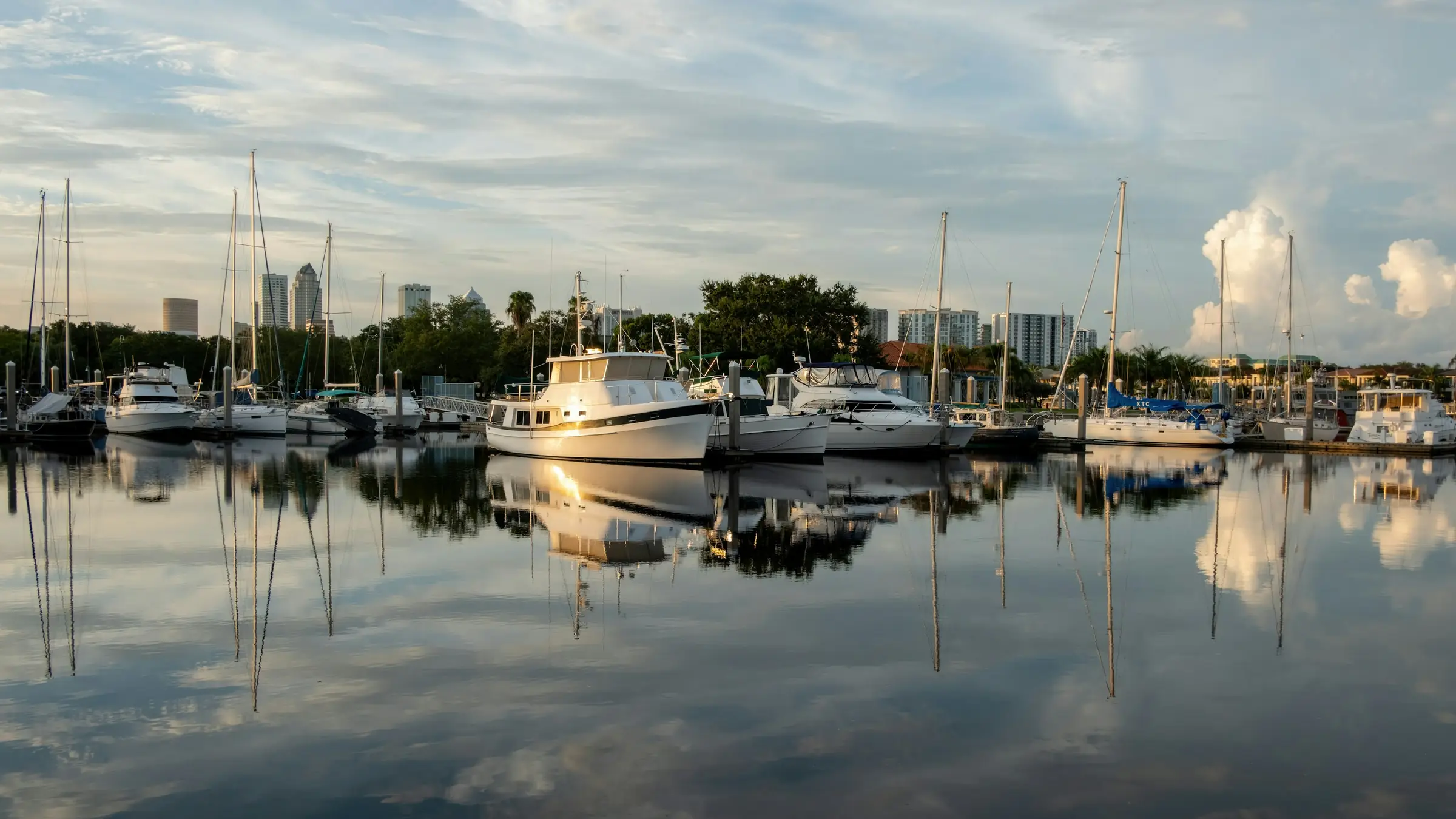
A yacht club membership card is the most underused thing in a Florida cruiser’s wallet. Carried into the right clubhouse, it buys a table for dinner, a shower, a night at a dock inside a city where the municipal marina is full, and the company of people who sail the same water. The arrangement is called reciprocity, and in Florida it runs mostly through one council of private clubs on both coasts, with a national register behind it for everyone else. The clubs decide the terms, club by club, and most of them publish those terms. Here is how the system works, what to bring, what to expect at the door, and which clubs say what.
How reciprocity works
Reciprocity is a courtesy between clubs, extended to each other’s members in good standing. A club that welcomes you does so because your club welcomes its members, and it sets its own conditions on the exchange. Two organisations put structure under that courtesy in Florida, and it helps to know which one a club belongs to, because the welcome differs.
The Florida Council of Yacht Clubs is the one that matters most inside the state. The St. Petersburg Yacht Club called the first meeting in August 1960, inviting the leading west-coast clubs to form a body “to encourage reciprocity between qualified yacht clubs” among other aims, and the council incorporated in July 1961 with thirteen charter clubs: Bird Key, Bradenton, Clearwater, Davis Island, The Field Club, Naples Yacht Club, Pass-a-Grille, Royal Palm, St. Petersburg, Sarasota, Tampa, Tarpon Springs and Venice. It has since spread to the Panhandle, the Keys and the east coast, and its directory lists 35 member clubs as of October 2026. The council describes the benefit as “social and dining privileges” at private clubs “offering excellent marina facilities”, tells visitors to “make reservations and ask about any dress code or restrictions”, and adds a footnote worth reading twice: some member clubs limit reciprocal use by nearby clubs, and enforcing that is the club’s business, not the council’s. Membership of one Florida council club is what makes the rest of the state’s clubhouses open to you.
The Yachting Club of America is the national layer. Founded in 1963 as the first national association of yacht clubs, it publishes the annual Register of American Yacht Clubs, which it calls “the oldest existing yacht club register in America” and which doubles as its reciprocity guide. Each listing carries the club’s reciprocity status, whether courtesy dockage is available, and its restaurant and lounge facilities, and the register is sold only to member clubs and their members, with an online edition behind a members-only login. The association’s own description of how the book is used is the whole system in two sentences: yachtsmen refer to it to learn the reciprocity status of clubs they intend to visit, and harbormasters and club managers refer to it to check the visiting yachtsman’s club. “Generally,” it says, “if the yacht club represented by a visiting yachtsman/yachtswoman is listed in the Register, reciprocal courtesies are extended.” Florida clubs call it by several names on their own pages (YCA, YCOA, “the American Register”, “the Registry of American Yacht Clubs”), and they are all the same book.
Two things sit beside those networks. On the Panhandle, Pensacola Yacht Club grants reciprocity to members of Gulf Yachting Association clubs as well as the Florida council’s, so a card from a Mobile or New Orleans club works there; the GYA itself is a racing association, founded in 1901, and reciprocity is something its member clubs extend to each other rather than a rule it writes. And a separate website called Yacht Clubs of America, which turns up in the same searches, is a small online list of clubs with a reciprocity column that paid listings fill in; a club’s “Yes” there is the club’s own word and nothing more.
What the clubs give, and the first-night convention
Dining and the bar are the core of every reciprocal arrangement, and at most clubs they are the whole of it unless you arrive by boat. For the boat, a convention has grown up among the Florida council’s clubs that several of them state outright: the first night at a transient dock is free to a visiting council member, and you pay for electricity and for anything after that. Smyrna puts it as “the first 24 hours free use of a transient boat slip”, Marco Island as “the first 24 hours of complimentary dockage”, St. Charles as “the first night of dockage is complimentary; members are responsible only for electricity”, Isles and Pensacola as “no charge” or “free” for the first 24 hours, and Coral Reef as “one complimentary night of dockage, subject to availability and advance reservation”. Captiva Island extends it to a second night once a month, electricity aside. Several clubs then bill the rest through your home club rather than taking your card: Isles says “all bills will be sent to your Club. No cash transactions are permitted”, and St. Charles and Eau Gallie describe the same arrangement. Others want a card at the door; Davis Island pays everything by credit card and offers council members the charge-back as an option.
Beyond the dock, what you get is what the club has. Pensacola lists pool, tennis courts, showers and ice for guests; Marathon opens its restaurant, bar, pool, showers, laundry and a pump-out at every slip to visitors; Halifax River has a heated pool, a boaters’ lounge and a complimentary laundry; Isles sells fuel to your club account when the dockmaster is on duty; Key Biscayne keeps showers and ice open around the clock. Read the marina page before you count on any of it, because some clubs have no dock for you at all. Key West extends its facilities to Yachting Club of America members but its marina and its waitlist were both full as of October 2026; Fort Pierce welcomes any YCA club member and sends boats next door to the city marina, having no marina of its own; Mount Dora offers the clubhouse only, “no dock, moorage, or waterfront access”. Two docks are out of action for the moment: Davis Island is rebuilding one of three after Helene and Milton and has no transient slips through the end of 2026, and The Moorings in Vero Beach expects its docks back in the fall of 2026.
What to bring
- Your club card, current. Nearly every published policy asks for it, and several say nothing else will do. Captiva: “show their current club card when requesting service.” Pensacola: “a valid reciprocal yacht club membership card and club number.” Tampa: “be prepared to show your membership card for identification purposes.” Davis Island takes a digital card and asks for a photo ID with it unless the card carries your photo.
- A letter of introduction from your club. This is the dividing line between the two networks. For Florida council members, Lauderdale says “no letter of introduction is required” and Davis Island says “no letter of recommendation is needed. Just your membership card and a photo ID.” For everyone else, the letter is standard, and it comes from your club’s office, not from you: Davis Island, Lauderdale, Key Biscayne, Smyrna and Naples Sailing & Yacht Club all want it sent ahead by your membership director or manager; Marco Island and Coral Ridge want it on official club letterhead; Key West and Clearwater ask every reciprocal visitor to email one before arriving, council member or not; St. Petersburg’s request form has you upload it. Ask your own club’s manager for a template; writing them is part of the job.
- A credit card. For the bar tab where the club will not bill your home club, for the guest card Coral Reef issues on arrival, and to secure a dock reservation at Marco Island. Key Biscayne also registers your boat and wants proof of insurance; Marco Island’s dockmaster may ask for registration and insurance at any time.
- Your burgee. Key Biscayne’s marina rules are explicit: “visiting yachts must fly the burgee of their primary yacht club upon entering our Marina.” Everywhere else it is simply the right thing to do, and the dockmaster will see it before you reach the fuel dock.
- Clothes for the dining room. The council’s own advice is to ask about the dress code, and the clubs mean it. Tampa requires jackets in the Pilot House after five from November 1 through Easter Sunday and bars bathing suits, scrubs, cut-offs, ripped jeans, tank tops and bare feet from the clubhouse at any time. Clearwater expects belted dress shorts and a collared shirt on men and no hats indoors. Naples Sailing & Yacht Club calls its code smart club casual: slacks and a collared shirt. Marathon wants collared shirts on men after six. Davis Island has no code beyond shirts, shoes and no wet swimsuits inside, and Pensacola is casual except on party nights.
The limits, which are the part people get wrong
A reciprocal card is a courtesy, and the clubs ration it, usually along two lines: how often you may come, and how close to home you live. The Florida council’s footnote about “limitation on reciprocal usage by nearby clubs” is the general rule; these are the specific ones published as of October 2026.
- Visit caps. Clearwater: “reciprocal members may visit up to twice per month.” St. Petersburg: twice a month for council members and twice a year for members of other reciprocal clubs, no walk-ins, no reservations inside 48 hours, a table of four at most, regattas and special events not counted, and a note that anyone who keeps coming “will be asked to join the Club.” Coral Reef: once per calendar quarter for council members, once a year for anyone else. Captiva: non-council clubs listed in the register, “not more than two (2) times a fiscal year.” Key West: “no more than three times per year.” Key Biscayne: fourteen days per calendar year for members of its non-council reciprocal clubs. Lauderdale issues a guest card for one week within three months to council members and one week within six months to others. Mount Dora admits reciprocal guests on Thursday dinner and Friday bar nights only, three dinners a year and no more than one a month, with reservations five days ahead.
- Distance rules. Coral Reef and Captiva both exclude visitors who live within fifty miles of the club; Key West extends privileges only to members of clubs more than fifty miles from Key West; Isles offers full reciprocity to resident council members. Two local pairs show the fine print at its finest: Carlouel admits Tampa Yacht & Country Club members on Wednesdays, Thursdays, Fridays and Sundays, by reservation and up to twenty-five a day, and Tampa returns the courtesy on Thursdays, Fridays and Sundays.
- Dock limits. Captiva’s overnight dockage runs two consecutive nights unless the general manager agrees otherwise; Key Biscayne’s courtesy dock is 48 hours, with ten days by arrangement; Naples Sailing & Yacht Club opens its dining room to register-club visitors from November through April only as overnight basin guests, for up to seven nights, and to all visiting members from May through October.
- Notice. The Moorings wants its form 72 hours, or three business days, ahead. Marco Island wants 48 hours and a confirmed slot before the letter goes in. Coral Reef wants a week for non-council requests and a week for a slip. Coral Ridge allows itself 24 hours to answer. Captiva books dockage up to two months out. Gulf Harbors suggests calling within thirty days of arrival. Pensacola is the exception that proves the rule: “reservations are not accepted”, so you check in advance whether dockage is likely, dock at the long pier and find the dockmaster.
Where the clubs stand, coast by coast
Every club below is linked to its listing, which carries its address, phone and website; the club’s own visiting or reciprocity page has the current terms. “States” means the policy is written on the club’s site as of October 2026.
Tampa Bay and the Gulf Coast is the council’s home water and has the densest run of welcomes. Clearwater Yacht Club states it “proudly welcomes” members of the council and the Yachting Club of America, with transient dockage and a tiki bar for reciprocal guests. Tampa Yacht & Country Club asks council visitors to reserve and show a card, keeps a dock attendant on duty around the clock, and sells fuel from seven in the morning until half an hour after sunset. Davis Island Yacht Club has the plainest instructions anywhere: check in at the bar, show the card, pay by credit card, and get the dockmaster’s approval before you come alongside. St. Petersburg Yacht Club states a strict two-tier dining policy and sends dock enquiries to its downtown marina office. Carlouel keeps 23 transient slips for boats to 125 feet and bills reciprocal charges through your club. Bradenton Yacht Club keeps a 185-foot transient dock on Governors Cut “for Members and FCYC Visitors” with showers, ice and Wi-Fi for overnight guests. Sarasota Yacht Club asks reciprocal members to phone the front desk and boaters to phone the dockmaster before arriving, and monitors VHF 16 and 68. Venice Yacht Club keeps a 120-foot T-dock for visiting council boats. Isles Yacht Club in Punta Gorda states the full package for resident council members: reserved dockage, card at the dock, first 24 hours free, fuel and laundry, everything billed home. Captiva Island Yacht Club has four reciprocal slips from 40 to 71 feet and the most carefully written guest policy on this coast. St. Charles Yacht Club near the Sanibel Causeway has diesel, gas and pump-out on the dock and bills through your club. Marco Island Yacht Club belongs to both networks and lays out the letter-and-reservation sequence step by step. Naples Sailing & Yacht Club gives council members year-round dockage and dining and register members a seasonal welcome by letter. Gulf Harbors Yacht Club in New Port Richey, outside the council, welcomes Yachting Club of America visitors to two floating transient docks booked through Dockwa. Tarpon Springs, Bird Key, Charlotte Harbor and Pelican Isle name their council or register membership on their sites without publishing visitor terms; Bird Key says it has guest docks for visiting vessels, and its clubhouse is being rebuilt for a December 2026 opening.
The Keys have two. Marathon Yacht Club on the Gulf side welcomes council and register visitors in boats to 67 feet and 21 feet of beam, with separate dockage rates for each network and the whole club open to visitors. Key West Yacht Club extends its clubhouse to Yachting Club of America members by letter and card, three visits a year, and has no slip to offer while its marina is full.
Miami and the Southeast keep the strictest doors and spell them out. Coral Reef Yacht Club in Coconut Grove welcomes council members by reservation and card, takes letters from other clubs a week ahead, has transient dockage for boats to 65 feet and seven feet of draft by advance arrangement, and brings fuel in by truck. Key Biscayne Yacht Club wants the burgee flying, the marina manager’s permission before you touch a slip, a membership card and letter at registration, and insurance on file, and in return invites visiting yachtsmen to the clubhouse Tuesday through Sunday. Lauderdale Yacht Club welcomes guests from other yacht clubs to its 65-slip marina through its marina director and issues the guest card described above. Coral Ridge Yacht Club on the Intracoastal takes council visitors by reservation and out-of-state clubs by letterhead, with slips to 85 feet. Biscayne Bay Yacht Club’s public pages stop at regattas and history, so its terms are a phone call. Miami Yacht Club on Watson Island names no network on its site and simply says visiting yachts should call the office for space, with charges that depend on what your club offers its members.
The east coast north of Palm Beach is where the council thins and the register matters more. Fort Pierce Yacht Club states that any member of a club enrolled in the Yachting Club of America is welcome, and points you to the city marina next door for a berth. The Moorings in Vero Beach takes council visitors by a 72-hour form that asks for your boat’s length, beam, draft and shore-power cord. Eau Gallie Yacht Club in Indian Harbour Beach describes the council’s first-night and bill-home convention and has transient dockage for yachts to 85 feet, pump-out and showers. Port Canaveral Yacht Club needs no card at all: it welcomes transient boaters outright, for up to three months, booked through Dockwa, with laundry, showers and ice. Smyrna Yacht Club in New Smyrna Beach belongs to both networks, takes boats to 45 feet, charges council visitors for power only on the first night, and asks register visitors for a letter. Halifax River Yacht Club in Daytona Beach welcomes council, register and MTOA guests to three-plus transient slips and a floating day dock for diners, and prefers a phone call to the radio. Florida Yacht Club in Jacksonville states its council membership as a member benefit and nothing about arriving visitors; St. Augustine Yacht Club left the council in 2003 and publishes no visitor terms on its site, so ask the office.
The Panhandle runs on the Gulf Yachting Association as much as the council. Pensacola Yacht Club grants reciprocity to GYA and council members alike, with limited dockage, no reservations, the first 24 hours free, and pool, tennis, showers and ice for guests. Fort Walton Yacht Club belongs to both and tells visitors from affiliated clubs to check in at the front office for the access codes. St. Andrews Bay in Panama City and Bay Point name their affiliations without visitor terms.
Inland, Mount Dora Yacht Club publishes a two-page reciprocity policy for members of Yachting Club of America clubs and “certain clubs” in the council: social use of the clubhouse on Thursday and Friday evenings, a card at check-in, dinner paid by card, no dock and no parking. Lake Beresford Yacht Club near DeLand describes its council reciprocity as a member benefit.
The clubs directory has a Visiting filter for reciprocal privileges and guest slips, and each listing’s “Joining” section says whether the club honours reciprocal cards.
How to ask
- Find the right office. Most clubs route reciprocal visits through the front desk or member services and dockage through the dockmaster, and they are different people with different phones. The club’s visiting page names them.
- Write before you call, and give them what the forms ask for. Your club’s full name (Captiva’s form says “not initials”), your membership number, the dates, how many in the party, and for the boat its length overall, beam, draft and whether you want a 30- or 50-amp cord, which is The Moorings’ list and serves everywhere. Ask about the dress code in the same message.
- Have your club send the letter. If the club is outside the Florida council, or you are visiting Clearwater or Key West, your membership director or general manager emails the letter of introduction to the address on the club’s page, on letterhead where Marco Island or Coral Ridge ask for it, confirming you are a member in good standing.
- Arrive by the book. Hail the dockmaster on 16 where the club says so (Naples Sailing & Yacht Club, Sarasota, Halifax River) and inside the hours it keeps, which at Coral Reef and Naples end at four or half past. Burgee up. Then go to the desk, or at Davis Island the bar, with the card and a photo ID.
- Settle the bill the club’s way. Card at the time of service at Key Biscayne, Key West and Davis Island; charged through your home club at Isles, St. Charles, Eau Gallie, Carlouel and, by option, Davis Island. St. Petersburg adds a service charge for reciprocal members and Naples Sailing & Yacht Club a service charge on food and drink; both say so on the page.
- Say thank you in the log. The council runs a cruising log with annual awards for the most clubs visited and the most miles, and a dock-to-dock distance chart for planning the next leg. The 2025 awards went to a Captiva boat for 1,973 miles and an Isles boat for 22 clubs visited.
If you belong to no club
Reciprocity is a members’ arrangement, and nothing here opens a private clubhouse to a boat without a card. The water is still yours. Port Canaveral Yacht Club and Gulf Harbors Yacht Club rent transient dockage to anyone through Dockwa, and the Palm Beach Sailing Club on the Lake Worth Lagoon runs a Visiting Yachtsmen program for cruisers passing through, mentioned on its site in passing as of October 2026, so write to the office for the current terms. The city mooring fields at Marathon, Vero Beach and St. Augustine are the cruiser’s clubhouses in all but name, and the living-aboard guide covers them. And several clubs on this page race on weeknights with open entry, Davis Island on Thursdays and St. Augustine on Wednesdays among them, which is the older and better way to be invited back.
Last reviewed October 2026.